
Anthony Weiner’s Flaccid Feminism

Originally published at Frontpage Magazine
___________
“My name is Anthony Weiner and I stand for women!â€
That’s not just a tailor-made caption for the indiscreet photo sent from the New York congressman’s Twitter account. Weiner proudly delivered that line twice during a rah-rah sisterhood speech to adoring fans at Planned Parenthood’s Stand Up for Women’s Health Rally in February. The only thing missing from his feminist cheerleading was a set of speculum-handled pom-poms.
But Weiner’s feminist rhetoric is far more tumid than the underwear-clad package he “can’t say with certitude†isn’t his — and just as susceptible to shrinkage. So here’s the cold water:
While the intended recipient of the lewd photo, 21-year-old Gennette Cordova, drowns in a raging media maelstrom, Anthony Weiner is using the only life preserver in sight as a hula hoop. Instead of ending the speculation about their relationship by asking law enforcement to investigate the alleged hacking of his Twitter account, Weiner spent the week tossing cagey Clintonian statements and erection puns to an increasingly suspicious press.
This is how Anthony Weiner stands for women.
Cordova and her family have been subjected to the kind of scrutiny, mockery, and even harassment normally reserved for public figures (and private citizens who vote Republican). Her candid party photos and off-the-cuff tweets are now front page news as bloggers and reporters rifle through cached social media accounts, hoping to shake out the single breadcrumb that might lead to a scoop on the young woman who denies “any inappropriate exchanges†with Weiner.
Continue reading at Frontpage Magazine.
The Right Way to Get Raped (A Guest Post for the Ladies by Ben Stein)
Originally published at NewsReal’s That’s What She Said
_____________
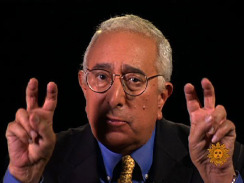 Editor’s note: The following is a guest post by Ben Stein. Stein is a writer, actor, economist, and lawyer living in Beverly Hills and Malibu.
Like the distinguished public servant Dominique Strauss-Kahn, I am a friend to all women, even the ones who didn’t fully appreciate my American Spectator column on the scurrilous charges filed against the former IMF chief. I’d like to extend an olive branch to those misguided members of the fairer sex by sharing some advice on the proper way to go about getting raped if you expect public intellectuals to take your charges seriously.
Ladies, my humble thoughts:
1.) Ensure that your rapist has a criminal history.
Should you find yourself being raped by a man with a long history of sexual abuse, take a moment to perform a criminal background check. This can be done with most modern smartphones as long as your hands are free.
No criminal record? In all likelihood, his sexually violent past is mere gossip and he is not a threat. You are engaged in a consensual sex act. Carry on.
2.) Find out your rapist’s profession.
Is your rapist an economist? If so, you are not being raped. As I asked in my last column, “Can anyone tell me any economists who have been convicted of violent sex crimes? Can anyone tell me of any heads of nonprofit international economic entities who have ever been charged and convicted of violent sexual crimes?”
As an economist, I can personally attest to the fact that economists do not rape. In fact, if I were to slip on a ski mask and surprise you in the dark alley by my house that I happen to know is rarely patrolled by police, rest assured, you’d be completely safe in my gloved hands.
3.) Choose a tall, muscular rapist with a weapon. Read more
French News Sites Describe Breast Size of Strauss-Kahn’s Rape Accuser

Originally published at NewsReal
____________
The size of her breasts, the shape of her backside, and of course, her name. These are some of the details Le Monde, the French “journal de référence,” and its subsidiary Le Post published about the woman who says IMF chief Dominique Strauss-Kahn groped her genitals and forced her to perform oral sex on him in a room at the Sofitel near Times Square.
France-Soir described the cut of her hotel maid uniform and how good she looks for a woman in her thirties, while France’s RMC radio reported that Strauss-Kahn’s attorneys were surprised by how “unattractive” she is.
And a bevy of friends and supporters rallied to the defense of Strauss-Kahn, a leading figure in the French Socialist Party, hoping to discredit his accuser lest she derail their plans for him to oust Sarkozy in the 2012 presidential elections.
A photo of the alleged victim is all over Twitter, and a Facebook profile in her supposed name was deleted shortly after links to it began to appear on blogs and social media sites. It’s unclear whether the Facebook profile was hers or a hoax account set up to smear her name. Today, another name and photo are circulating in the French media. It doesn’t matter if they get it right–the effect is the same. Just as they did to the accusers in the Julian Assange rape case, the “pro-woman” Left has launched a vicious campaign to terrorize and shame this woman into silence. Read more
How a U.S. Military Contract Could Impede Women’s Progress in Afghanistan

Originally published at NewsReal’s That’s What She Said
______
Four Afghan women have achieved something that would have been unimaginable a decade ago: they are training alongside male recruits to become pilots in the Afghan Air Force. Amidst headlines about poverty, illiteracy, and breathtaking levels of violence against women, their accomplishments are beyond heartening.
Second Lt. Sourya Saleh hopes to serve as a role model for other Afghan women after completing her aviation training in the United States.
“We are very happy to be going to open these doors for the other women to come and join the military, to show them you can do this and make our country proud,†she said. “We want for all Afghan girls to know they can do anything.â€
Another newly minted officer, Second Lt. Mary Sharifzada, told the Air Force Times that becoming a pilot has been her dream since she was a little girl:
“I want to show the people of Afghanistan that women are strong,†Sharifzada said. “We want to show the people of the world that the women of Afghanistan are strong and they can do anything they want.â€
“They said I’m as brave as a man,†said Second Lt. Masooma Hussaini.
As brave as men, and according to Lt. Col. John Howard of the Thunder Lab training program, as capable as their male counterparts. But these women and future recruits may not get the chance to prove “they can do anything they want” if the United States selects Brazilian aircraft manufacturer Embraer to supply turboprop planes for the counterinsurgency effort in Afghanistan.
In the April 2011 issue of Smart Girl Nation, my friend Ashley Sewell explains how the Brazilian plane would bar skilled female pilots from flying Light Air Support (LAS) and light attack and armed reconnaissance (LAAR) missions:
The front-runners are the American-made Hawker Beechcraft AT-6 (a plane like the T-6 training aircraft that would accommodate 95% of women pilots) and the Brazilian-made Embraer EMB-314 (a plane that sticks to older standards thus eliminating the possibility of being flown by a woman).
Those older standards exclude more than 80 percent of women (and small men) from safely flying the planes that will be used to train and equip the Afghan Air Force.
There’s no question that operational performance and pilot safety should be the primary criteria in choosing between the Embraer and Hawker Beechcraft planes. But if the two aircraft perform comparably, can we afford to indulge the Commander-in-Chief‘s childish love affair with Brazil, forcing the struggling Afghan Air Force to sideline much needed talent?
That’s not the only reason the Hawker Beechcraft proposal is superior. Read more
The 9 Most Asinine Statements by Vile Harpy Joy Behar
Originally published on November 7, 2010 at David Horowitz’s NewsReal
by Jenn Q. Public & Lori Ziganto
———

It came as quite a shock to the leader of one women’s organization when Joy Behar, ostensibly a comedian, called Sharron Angle a “bitch†on the “The View” last month. Sonja Eddings Brown, president of The Kitchen Cabinet, told The Daily Caller, “We thought Joy Behar was a classier act than this.”
To which we responded, “Ha ha ha ha ha!” followed by, “HA HA HA HA HA!” When our laughter-induced wheezing subsided — and we’re not gonna lie, there may have been some giggle-snorting — the idea for this post was born.
Before the obligatory lefty panty bunching begins in response to this post’s title, you should know that it’s not the first time we’ve been called mean girls and name-callers, and it won’t be the last. But we have refrained from calling Ms. Behar the b-word, and that gives us exclusive claim to the high road here.
Also, we’re bloggers, not holier-than-thou television “personalities” who get off on squawking about how we’re better than you because we vote Democrat. And we may have had a couple of beers while writing this post. Our readers are important to us and we’re willing to go the extra mile. For you.
So, with all of the fanfare a class act like Joy Behar deserves, we bring you her 9 most inane statements, the ones that should have even the Left shuddering in embarrassment. (Yeah, we’re not holding our breath either.)Â Read more
The New Workplace Sexism: Thinking Chicks Are Hot
Originally published on August 14, 2010 at David Horowitz’s NewsReal
———

Last week The American Prospect revealed an unsettling workplace trend. This discovery is completely unanticipated, so prepare to be shocked.
When female coworkers are out of earshot, men sometimes talk about them. Just awful, right? And guys aren’t just discussing the work habits of their female colleagues — occasionally they mention their looks!
This is the new “sexual harassment”: not the groping, fondling, and obscene comments of yesteryear, but “what’s said about [women] when their backs are turned.” According to the Prospect‘s Ann Friedman, “behind-their-back comments are also intimidation and bullying of a sexual nature.” And this indirect harassment is even worse than dealing with run-of-the-mill lewdness from male coworkers.
[G]iven that networking and reputation are keys to success in many professions, what people say about you is arguably more important than what they say to your face. If your professional contacts are talking about your legs rather than your résumé, you’re at a disadvantage. I know how to handle direct sexist comments. It’s much harder to think about how to shut down a conversation about me that I may not even be aware of.
Watch out, guys: if you’re hanging out at the bar after work, be sure to limit the leg talk to women who aren’t coworkers. Unless, of course, the owners of said legs are around to “handle” the comments. Got it?
Friedman describes some of the other conversations that would be off limits in her Utopian vision of a world in which men no longer talk about attractive women:
Some of the guys you talk to about women are our friends — and they tell us what you’re saying. That’s how I found out that a female editor I know had garnered a totally unwarranted reputation as a flirt. How I know that a certain male editor likes to make side comments about the bodies of female interns. How I heard about an older male co-worker who wistfully expressed that he wishes he were 20 years younger so he could hit on the young women at the office.
So, let me get this straight. It’s intimidation and bullying for a man to pine for his youth when he would have had a better chance with young women at the office. It’s harassment for a guy to talk to his office buddies about the way interns look. And gossiping about the flirty personality of a coworker is completely out of bounds (when men do it).
Where exactly is the chauvinism here?
There’s nothing sexist about guys digging chicks and vice versa. In fact, I’ll let Ann Friedman in on a little secret: it’s kind of how we keep the human species going. Simply talking about who’s hot (or not) is a common and harmless pastime, even when it involves one’s colleagues. And if Friedman was honest, she’d admit that talking about how coworkers look is something both sexes engage in. Equally.
But this isn’t about honesty, it’s about grievance mongering. Club Victimhood is open for business and Friedman is on hand to distribute all access passes. Dreaming up new classes of oppression and new categories of victimhood is how the so-called feminists on the Left build support for their movement. As with all flavors of Marxism, leftist feminism can’t exist without ginned up resentment among the “oppressed.” The social revolution will never come if the Left allows people to be content with their lives and secure in their equality as human beings.
And so we have the latest complaint for the perpetually aggrieved to latch onto: indirect sexual harassment. Have fun at work on Monday, fellas!
—–
Follow Jenn on Twitter.
-
Recent Posts
-
Read More From Jenn Q. Public at:
-
Recent Twitter Updates
-
Noteworthy Blogs
- A Traditional Life Lived
- Autographed Letter Signed
- Bookworm Room
- Cassy Fiano
- Chris is RIGHT
- David Horowitz's NewsReal Blog
- GayPatriot
- Hennessy’s View
- HoosierAccess
- Hot Air
- Instapundit
- Ironic Surrealism
- Jenny Erikson
- John Goodman’s Health Policy Blog
- Lisa Graas
- Melissa Clouthier
- Michelle Malkin
- Neo-Neocon
- Pink Elephant Pundit
- Racebusters
- Red Alerts
- Run & Gun
- Sister Toldjah
- Smart Girl Nation
- Snark & Boobs
- Tammy Bruce
- The Anchoress
- The DC Trawler with Jim Treacher
- The NeoSexist
- The New Agenda
- The Real Polichick
- The Sundries Shack
- The Truth in Black and Right
- what if?
